Is Google Finally Cracking Down on Self-Promotional Listicles?
The most popular 'GEO' tactic might indeed be risky for SEO purposes after all

Jump straight to examples of affected websites
Over the past year, one of the most common tactics for gaining visibility in AI search has been for companies to publish “listicle” content on their own blogs - ranking the best companies or products in their niche and placing themselves in the #1 spot.
There are variations of this approach - the listicle might contain a list of the best companies, or it could also list the best products in a specific industry. The common thread is that the company publishing the blog post ranks themselves, and/or their own products, in the top position.
It has also become increasingly common for companies using this tactic to collaborate with others in the same industry, mutually promoting one another in their respective listicles - a modern twist on reciprocal linking: you mention me, and I’ll mention you.
Over the past year or two, these self-serving listicles have proven to be effective at influencing traditional search rankings - and, by extension, visibility within LLMs that rely on retrieval-augmented generation (RAG) - when users search for the top companies, products, or services in a given niche.
For example: if you type “best content marketing agencies” into Google’s AI Overviews, you might see a result like this:
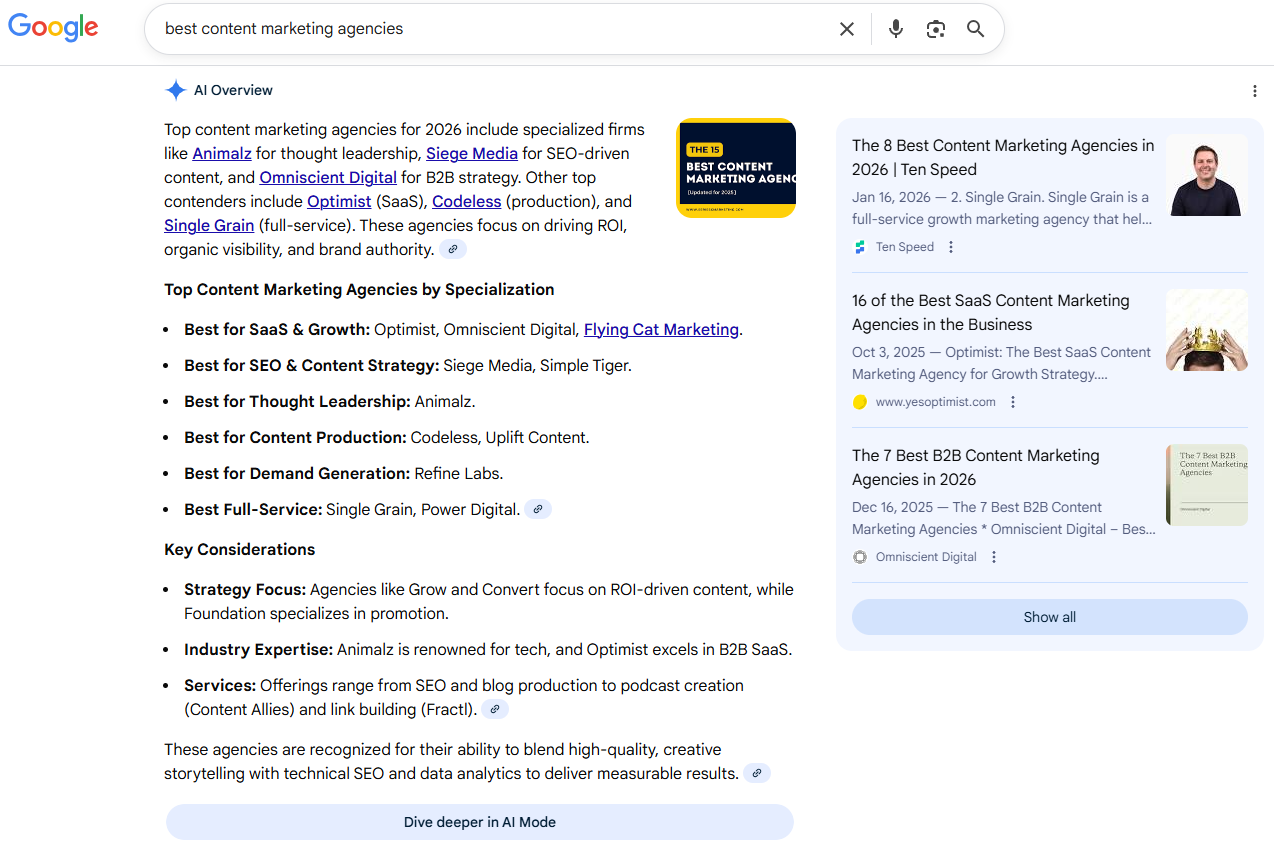
When you dig into the listed sources, you’ll notice that the recommended companies are using listicle-style blogs to rank themselves as the #1 top content marketing agency (example articles from Omniscient, Ten Speed, and Optimist are shown as sources above).
Search queries containing “best” tend to return recent results both in the search results and within LLM responses. For example, when a user is looking for the “best accounting software for small business,” Google often prominently ranks articles that were published or updated within the last year, and ChatGPT also generates fan-out queries containing “2026” to ensure the user’s query pulls up recent information:
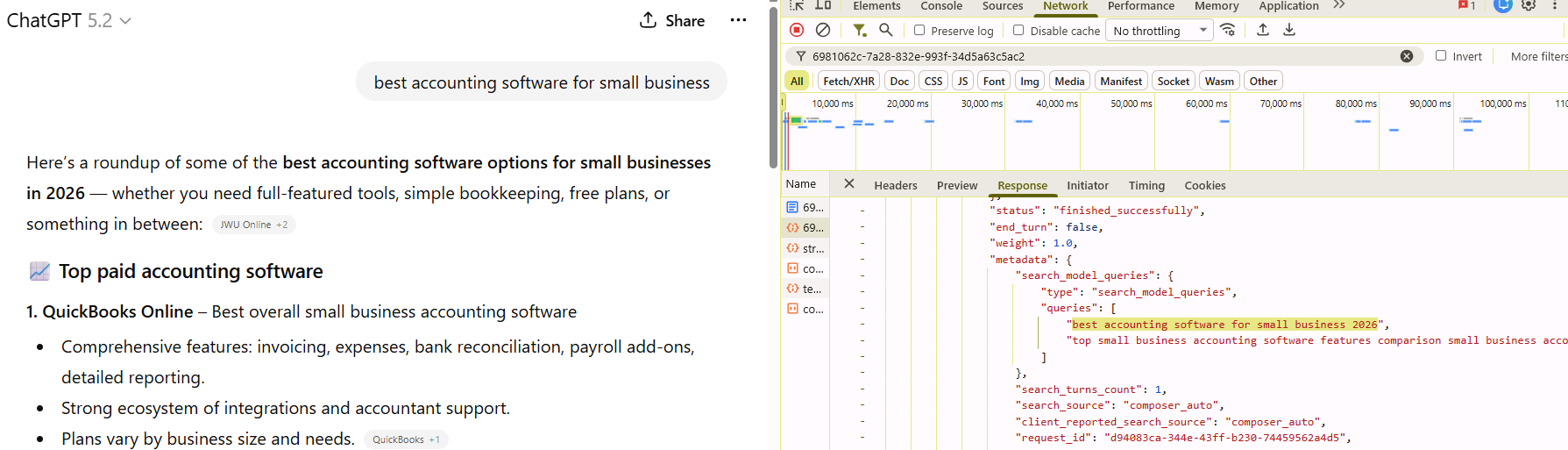
Therefore, part of this approach is to ensure that the article is either recently published, and/or recently updated with the current year in the title, to benefit from the search results and LLMs prioritizing recent results for these queries.
The Gray Area of SEO
I consider this tactic to fall into the “gray area” of SEO. SEO strategies are often labeled as “white hat” or “black hat”—shorthand for approaches that either comply with search engine policies or clearly violate them and are treated as spam. Some tactics, however, sit in between: they aren’t illegal or overtly malicious, and not necessarily unethical, but they can be misleading to users. In many cases, they are implemented primarily for SEO benefit rather than to deliver a genuinely valuable or authentic user experience.
The concept of the “gray area” is one that SEO expert Glenn Gabe frequently references in his analysis of Google updates. His definition closely aligns with mine: a space where sites may not be explicitly violating Google’s policies, but still lack strong quality signals or rely on risky tactics - leaving them especially vulnerable to volatility as Google’s core systems evolve.
When evaluating where a given tactic might land, I often refer to Google’s recommendations about avoiding creating content that is written primarily for search engines, not humans. With this approach, a few of Google’s questions come into play:
Does the content provide original information, reporting, research, or analysis?
Although these pages often claim extensive research, that credibility is undermined by consistently ranking their own company first and by the implausibility that they have truly hired and evaluated the other competitors they rank in the listicle. Google has long recommended that review content contains real evidence of having tested the reviewed products or services. These pages almost always lack this evidence.
Does the title avoid exaggerating or being misleading?
Using “best” in the title implies an objective, independent evaluation. When a company ranks itself #1 without clear disclosure or transparent methodology, that framing can be misleading - even if the claims aren’t technically false.
Does the content present information in a way that makes you want to trust it?
Articles that rank the publisher’s own company as the best company introduce an inherent bias that undermines trust. Without third-party validation, reviewer credentials, or evidence of independent, objective testing, the information lacks the signals users (and Google) expect from credible reviews.
For these reasons, I haven’t been recommending these types of listicles as a sustainable strategy for building long-term visibility in organic search or AI-generated answers. They rarely provide an honest or authentic user experience, and tactics that sit in the gray area of Google’s content and spam policies have a long track record of eventually creating problems for site owners over time.
It Works, Until it Doesn’t
The challenge with SEO tactics that fall into the gray area is that they can definitely drive strong results - at least for a while. Furthermore, with the rise of AI search, we’re seeing that LLMs like ChatGPT are certainly susceptible to spammy tactics and currently lack Google’s level of sophistication in detecting and countering manipulative SEO approaches.
That said, there’s a familiar line anyone who’s followed my work has heard me say on repeat: it works, until it doesn’t.
When a tactic proves effective at driving SEO visibility and becomes widely adopted, Google (and other search engines) almost always develop ways to detect and suppress it. This pattern is what I call “the cycle of SEO” - a concept I explored in depth during my 2025 BrightonSEO keynote, shown below:
I shared a few times throughout 2025 that I believe the excessive use of self-promotional listicles will be a common pattern among websites negatively impacted by upcoming Google core updates. I have also been theorizing that Google may develop new manual actions for this particular tactic (since it may be hard to identify algorithmically). Here’s a clip of me at the Profound Zero Click Search event in NYC back in October, explaining how abandoning SEO for GEO tactics can be dangerous.
Furthermore, I wasn’t the only one to caution against self-promotional listicles. Over the past year, Wil Reynolds, founder and CEO of Seer Interactive, has warned in conference talks and other resources that this approach lacks authenticity and risks undermining audience trust.
Similarly, Glenn Gabe, who also specializes in Google core update recovery, recently shared an example of a site potentially losing traffic due to excessive use of listicles. Glenn also cautioned against this approach in his 2025 December Core Update article.
However, many sites doubled down on self-promotional listicles because, despite the risks, they have proven highly effective at driving visibility in both organic search results and AI answers. Brands featured in these self-serving listicles have clearly benefited in recent months. But early signs from a recent Google update suggest the window for this tactic may be closing.
Searching for Clues After Google Ranking Volatility
Barry Schwartz of Search Engine Roundtable reported significant Google ranking volatility in January 2026, a couple weeks after the conclusion of the December 2025 Core Update. When volatility like this surfaces, I review affected sites to identify emerging patterns - and this time, I was surprised to see sharp visibility declines across several large brands, all beginning around the same period.
While performance drops during confirmed and unconfirmed updates can stem from many factors, a few patterns across recently impacted sites were unusually consistent this time. The first trend I noticed is that several well-known brands saw substantial organic visibility declines beginning around mid-to-late January. (I use the Sistrix U.S. Visibility Index to measure this.)
Based on the type of content I saw most heavily impacted, it seems possible this volatility reflects ongoing refinements to Google’s reviews system, which has increasingly focused on detecting self-serving, biased, or low-evidence review content.
In most cases, I also observed that the blog was the primary driver of the visibility decline, accounting for the largest share of the losses, or a similar content hub containing articles or resources.
The visibility chart below shows an example of a well-known $8B B2B brand that saw its organic visibility drop by a whopping -49% between January 21 and February 2, 2026.
Note: I have redacted company names and branded product names from all the below screenshots for the purpose of protecting the sites’ anonymity.
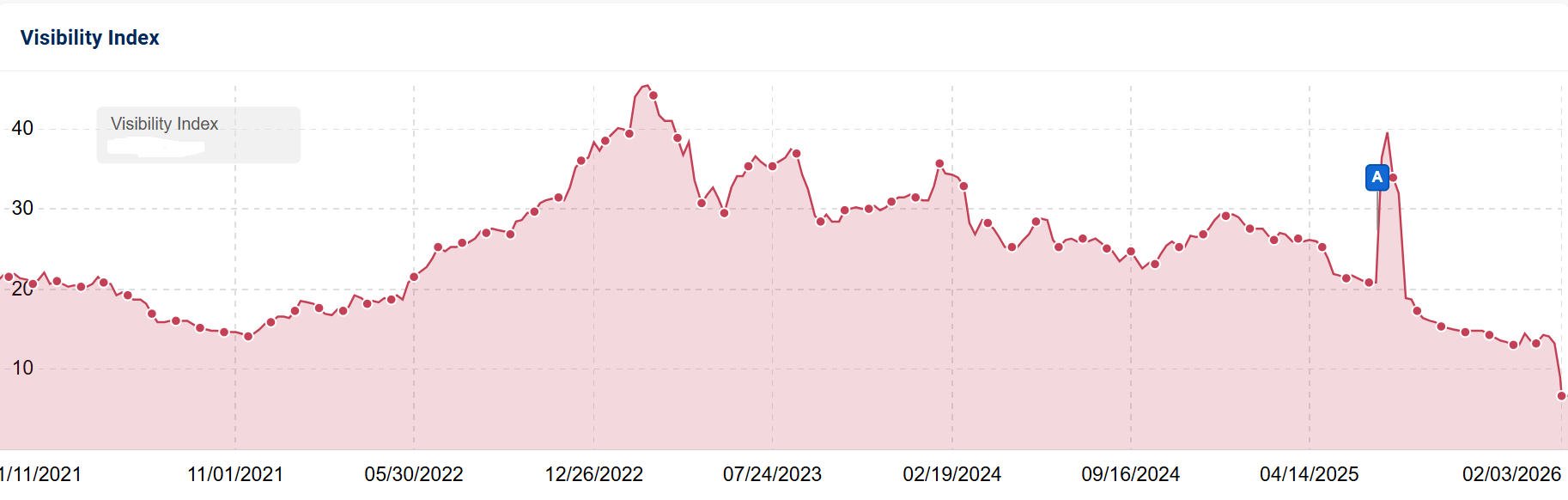
The company blog makes up 77% of this site’s visibility, and it shows a massive visibility decline since mid-January 2026:
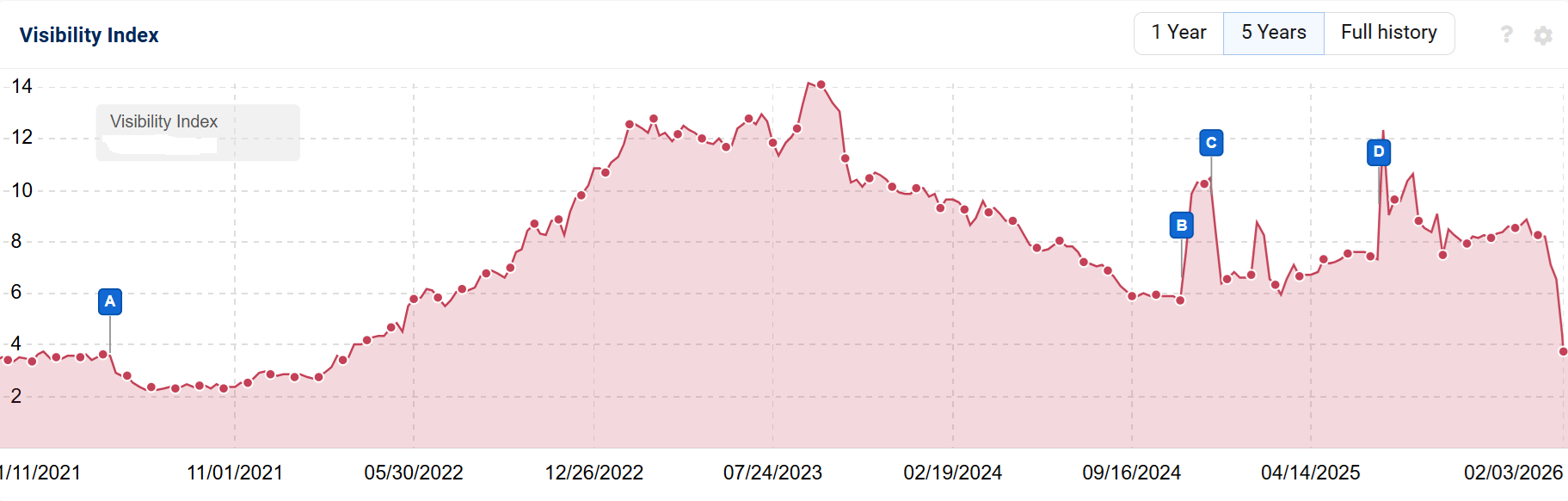
Other subfolders and subdomains on the site showed much smaller declines, or even visibility gains, during the same time period:
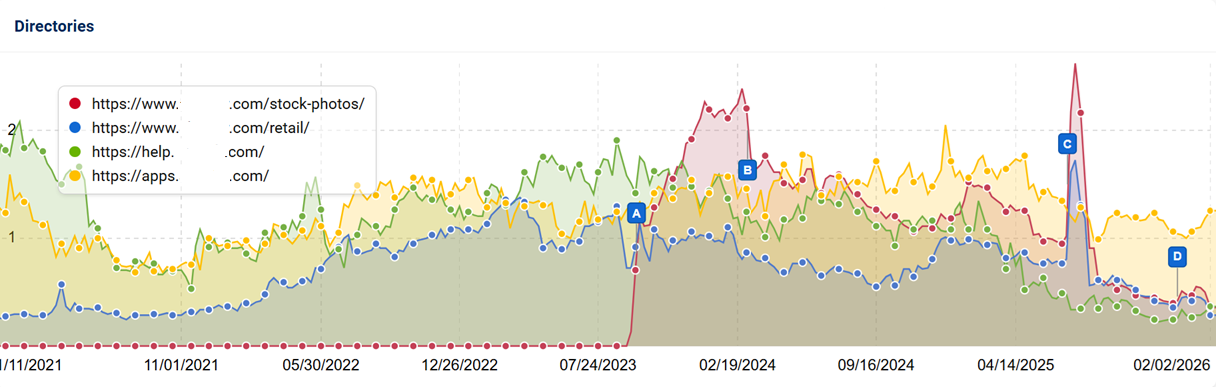
I dug through the blog articles to look for common patterns employed by sites negatively impacted by algorithm updates, and did see some of the common culprits: highly-similar programmatic content templates, excessive informational content targeting various “who, what, when” search terms, and over-use of ‘2026’ across titles, despite the year being only four weeks underway.
But something else stood out: the blog contained dozens of self-promotional listicles. 191 of them, to be precise. By self-promoting listicles, I mean an article containing “best” where the company lists themselves as the #1 best. You can easily detect this with the following search on Google (replace with your site’s details):
site:company.com/blog/ intitle:best “1. company”
or
site:company.com/blog/ “best” “1. company”
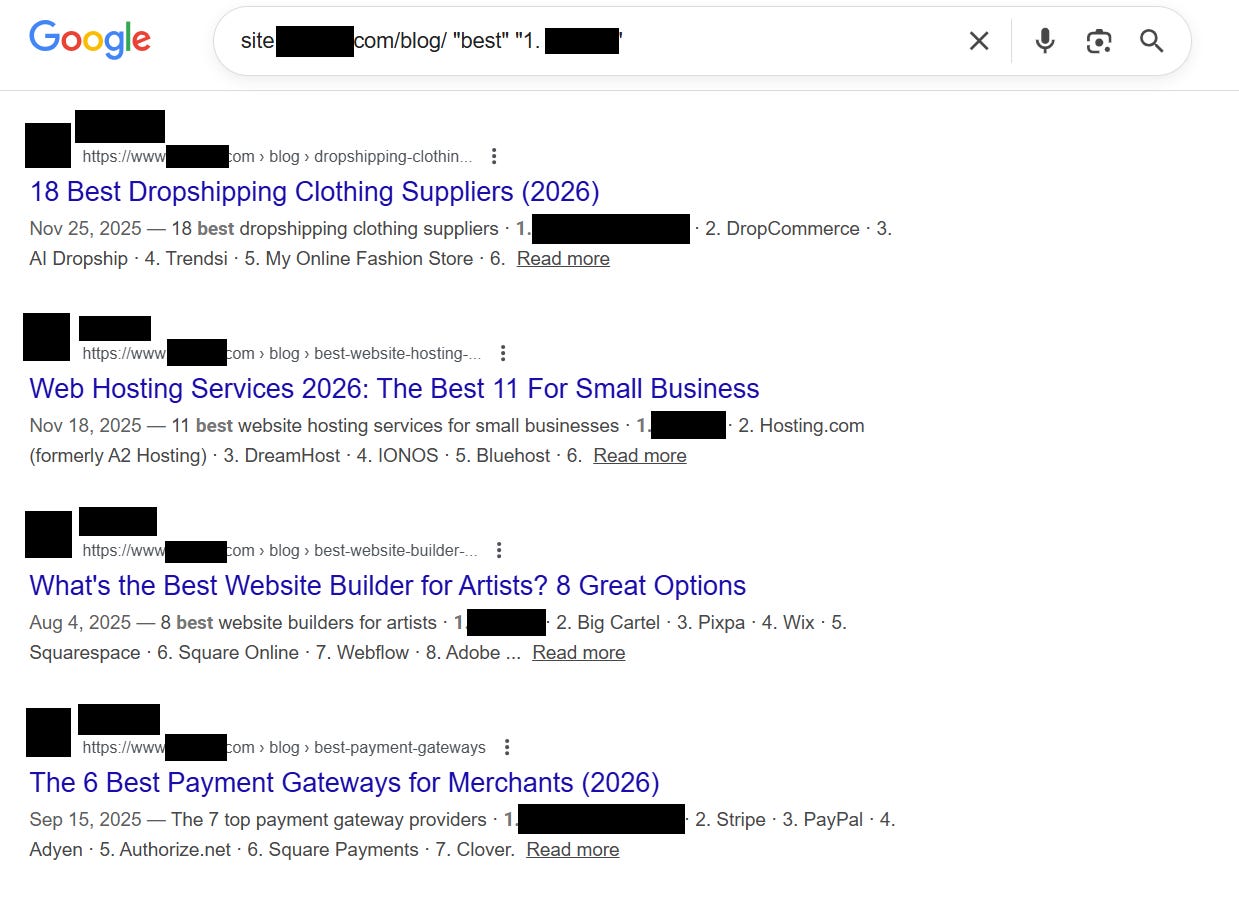
Now, I must point out that this company’s blog has ~30,000 articles indexed on Google, so 191 is a drop in the bucket. That said, producing 191 self-promotional listicle articles feels more like an intentional strategy than an accident.
Here is another example of a SaaS company that was hit hard beginning around January 19. The site dropped in overall Google organic search visibility by -43% since the recent ranking volatility began.
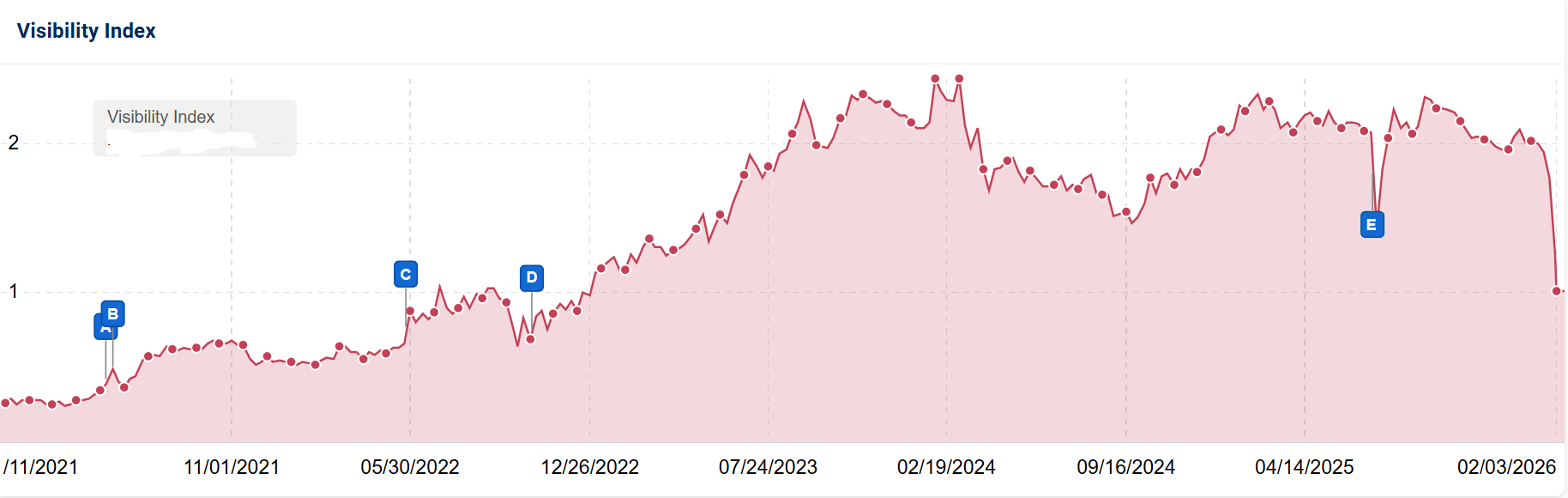
Approximately ~85% of the site’s organic visibility stems from its /guide/ folder, which saw the most significant visibility drop:
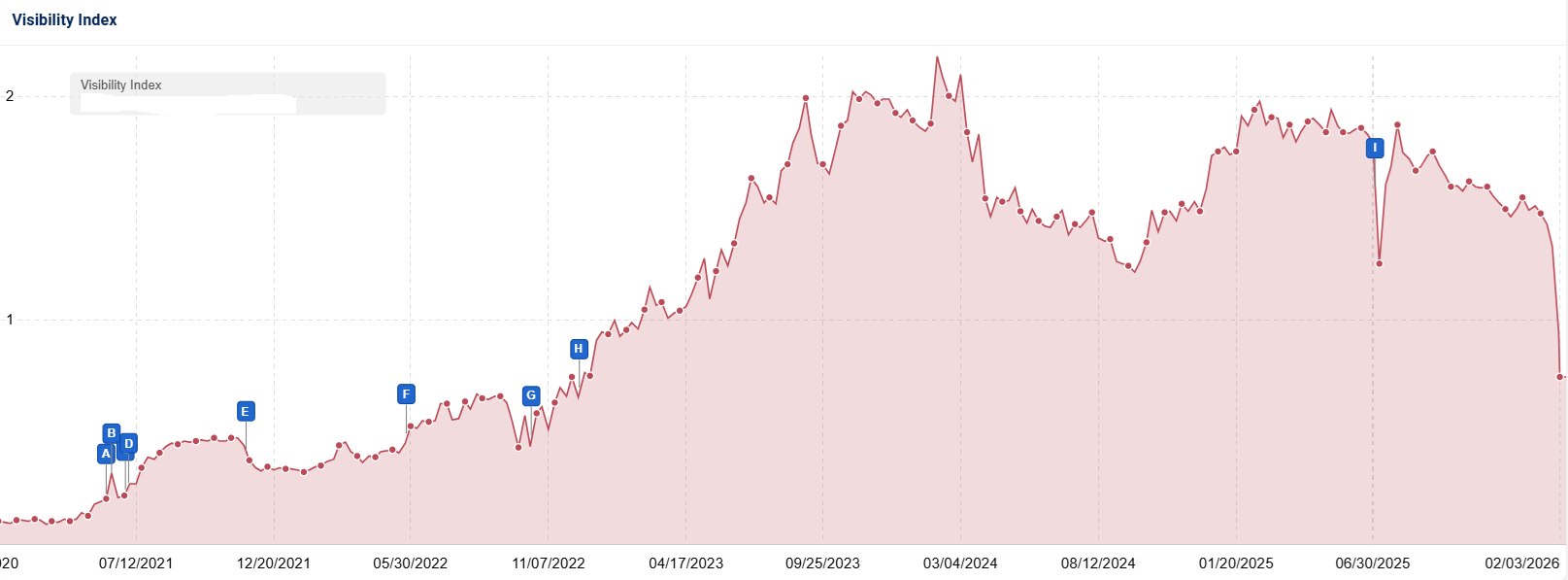
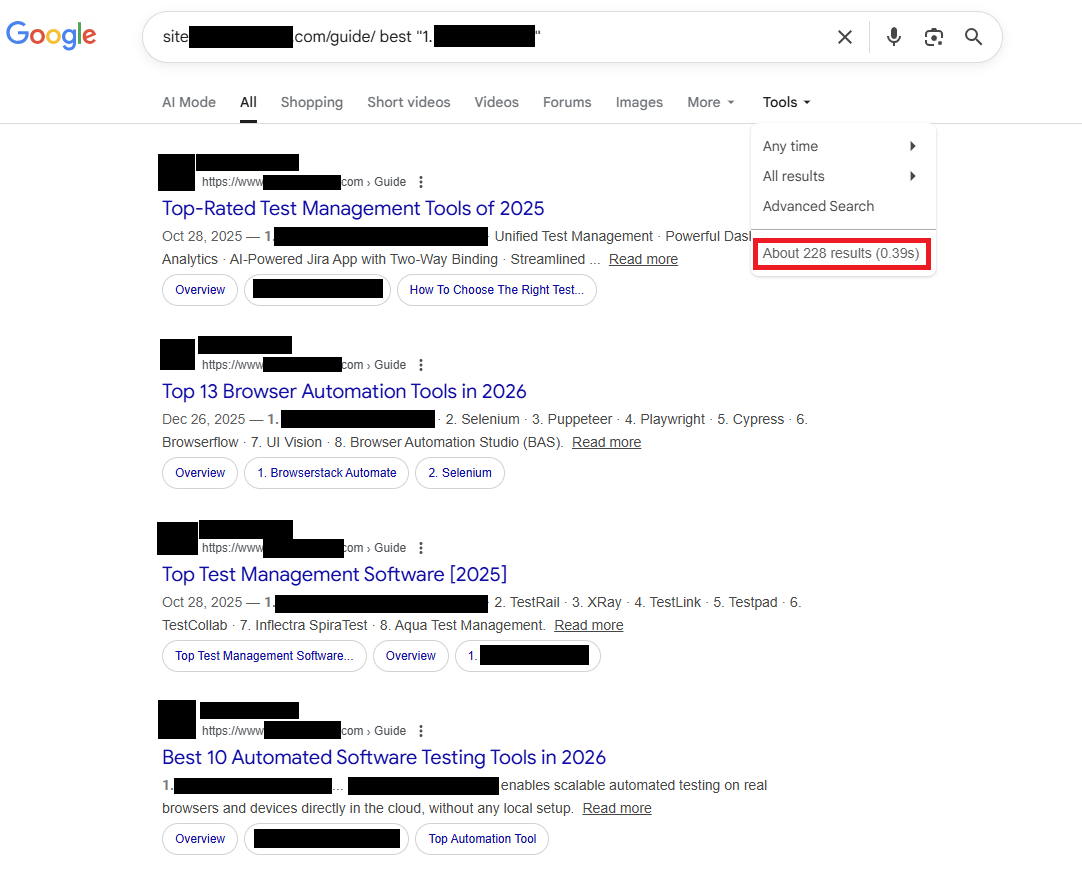
Looking through the /guide/ folder shows dozens of educational articles related to the site’s offerings - about 2,780 indexed articles on Google. But looking again at whether the /guide/ folder uses self-promotional “best” listicles where the company ranks itself #1, lo and behold - there are 228 such articles:
The next example is a B2B/B2C SaaS company that dropped by -42% visibility since mid-January 2026.
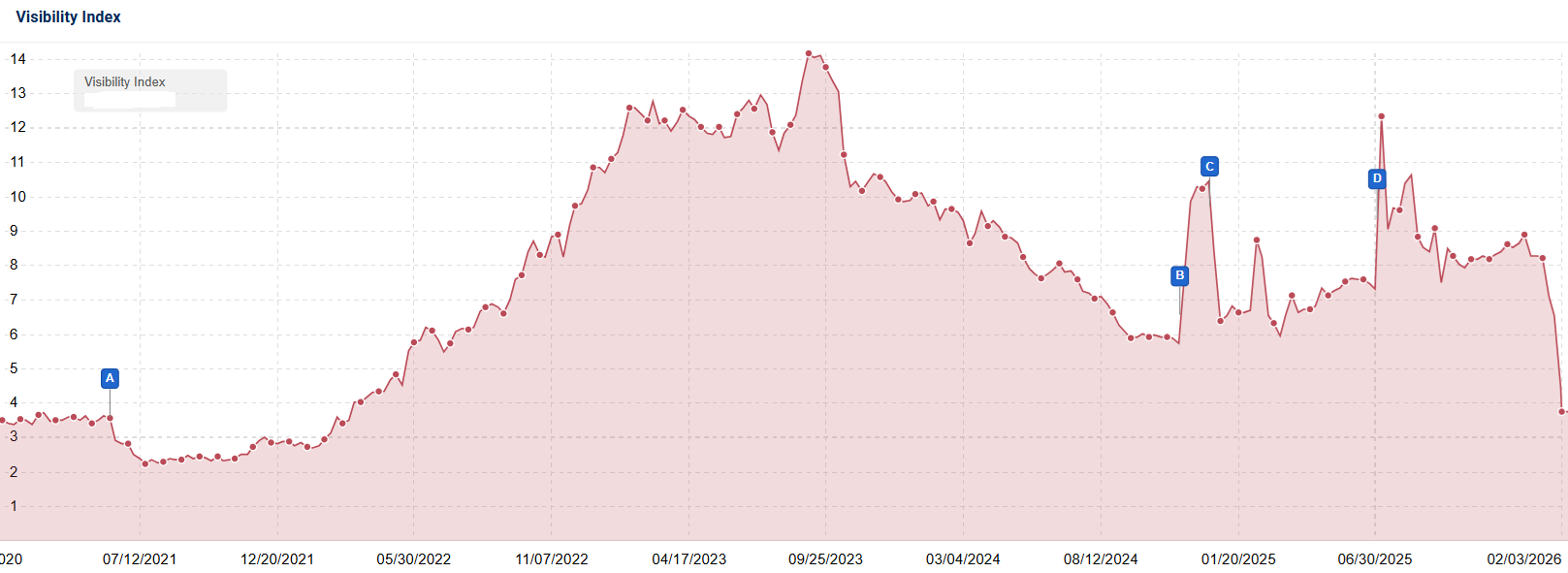
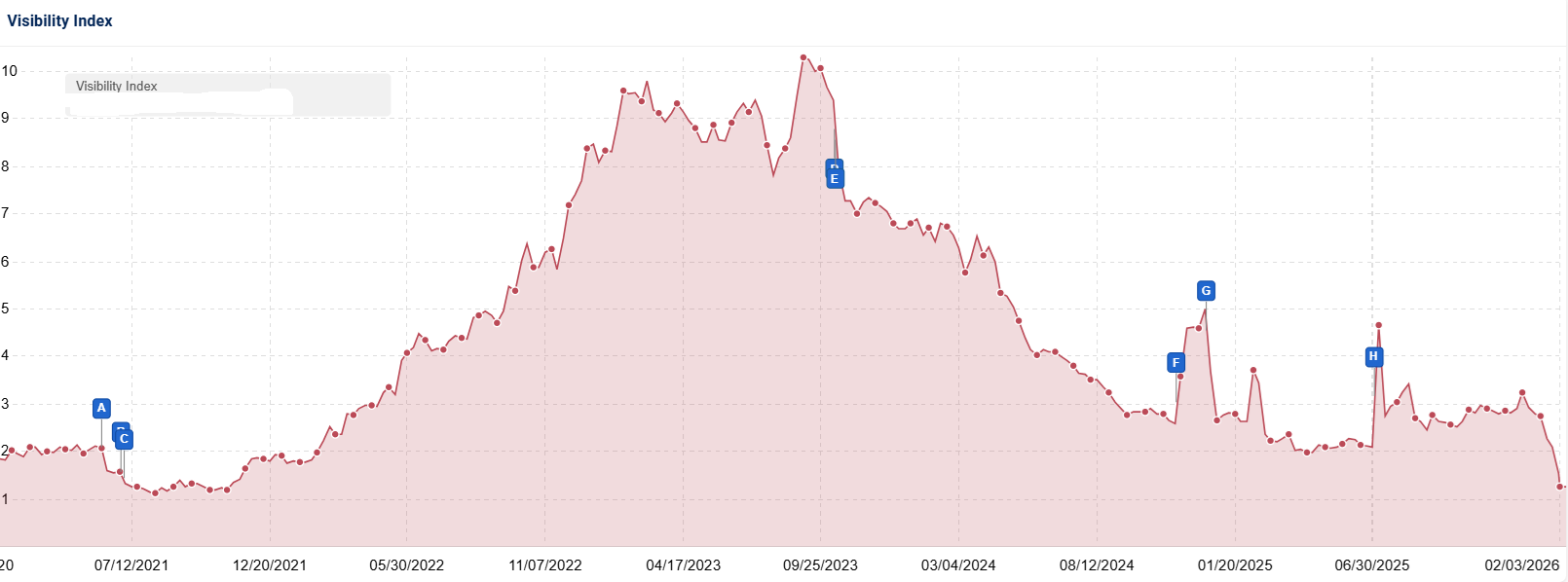
The vast majority of the site’s visibility comes from its /tutorials/ folder, which saw the most significant visibility decline, dropping to a visibility level the folder hadn’t seen since 2021:
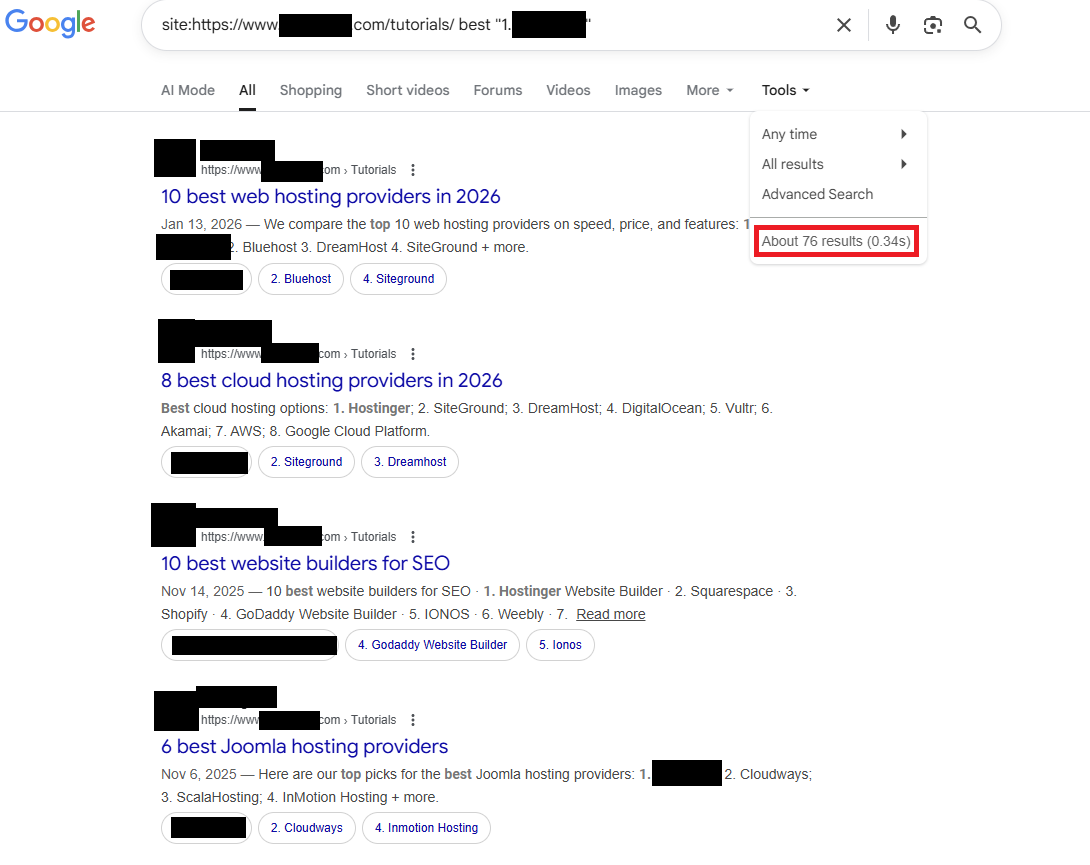
Among the 1,980 tutorials indexed in Google’s results, 76 of them are self-serving listicles, 38 of which have been updated to include ‘2026’ in the title:
Now, here’s another example of a B2B SaaS company that lost -38% of its organic visibility since the ranking volatility started:
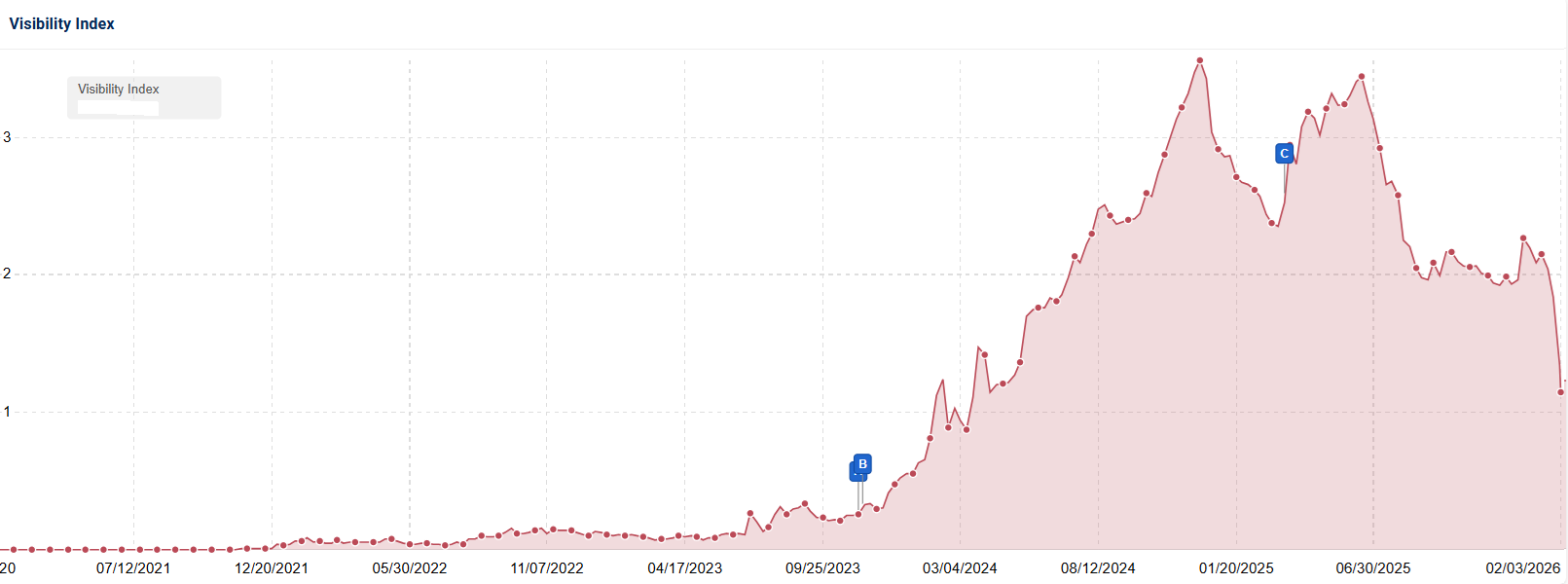
About ~80% of this site’s visibility stems from its blog, which, as with other examples, saw by far the greatest drop in visibility:
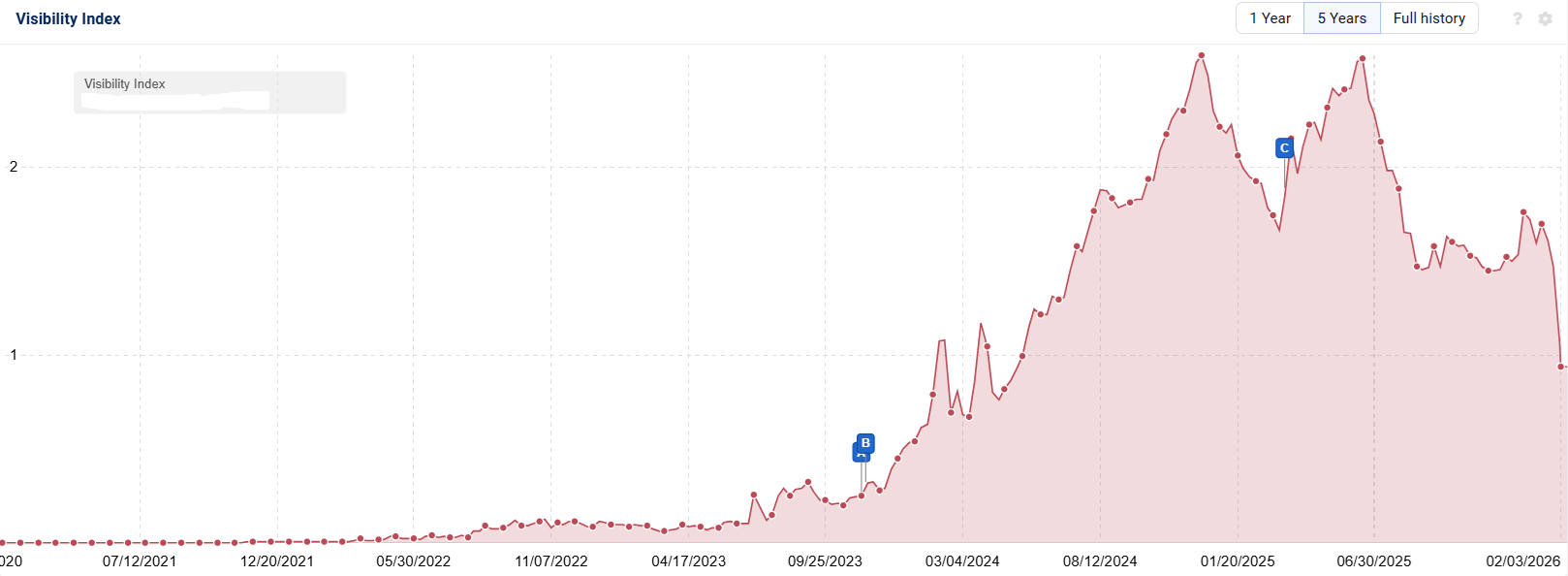
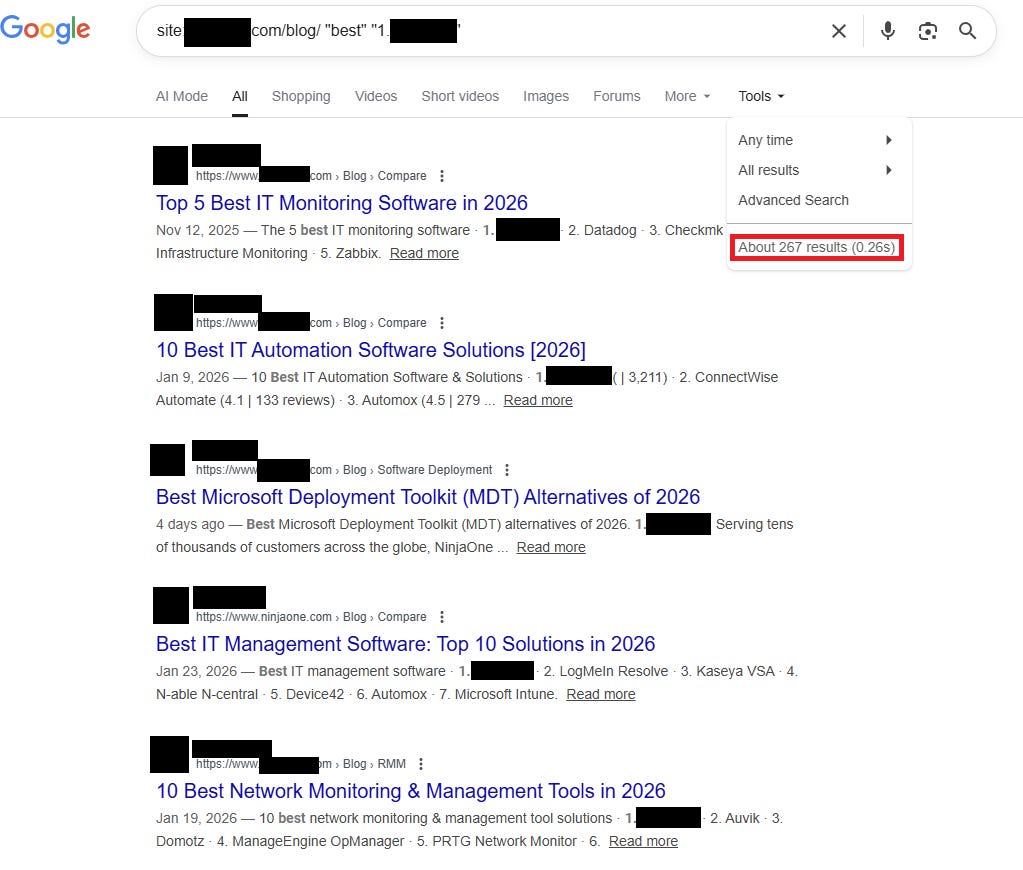
Among the 2,790 indexed pages on the blog, 267 of them are self-promotional “best” listicles where the company ranks itself or its own products as #1. 76 of them use ‘2026’ in the title tag, which could also raise some flags, given the current date.
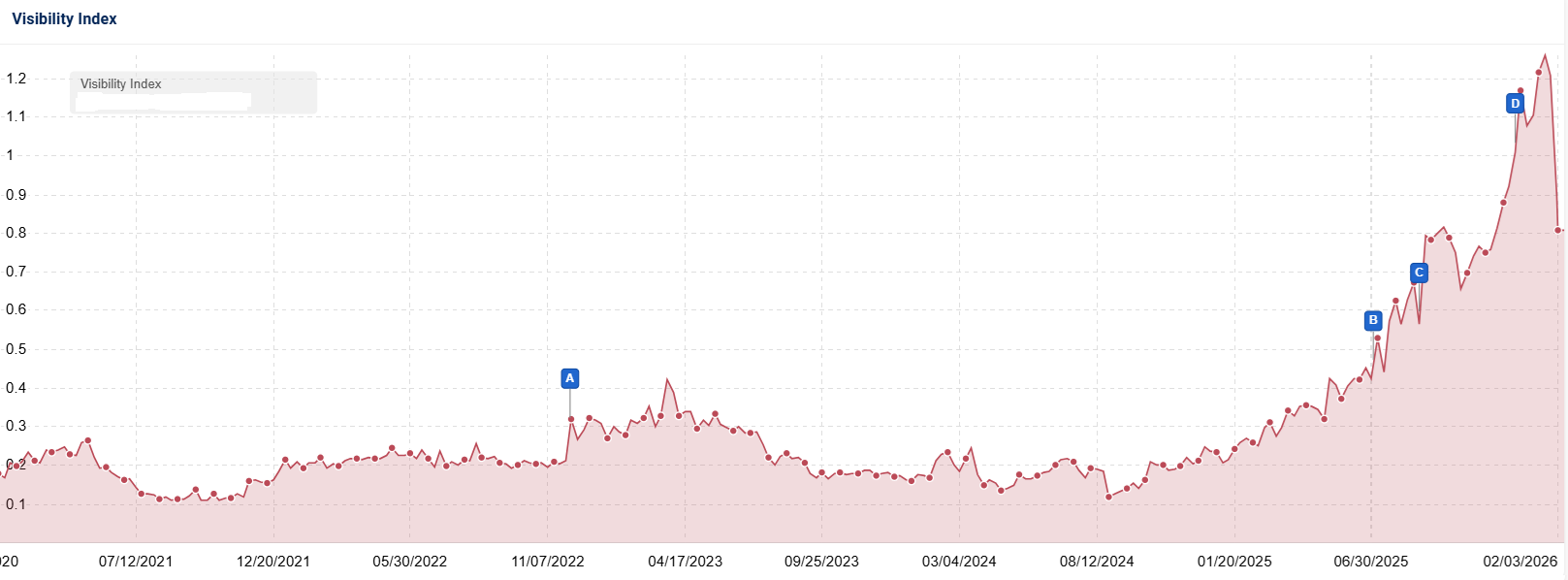
Next up is a popular SaaS product that dropped by -34% total visibility since the volatility started. In this case, the site had actually seen substantial SEO growth throughout 2025 and into early 2026, but the site is quickly reversing course over the last two weeks:
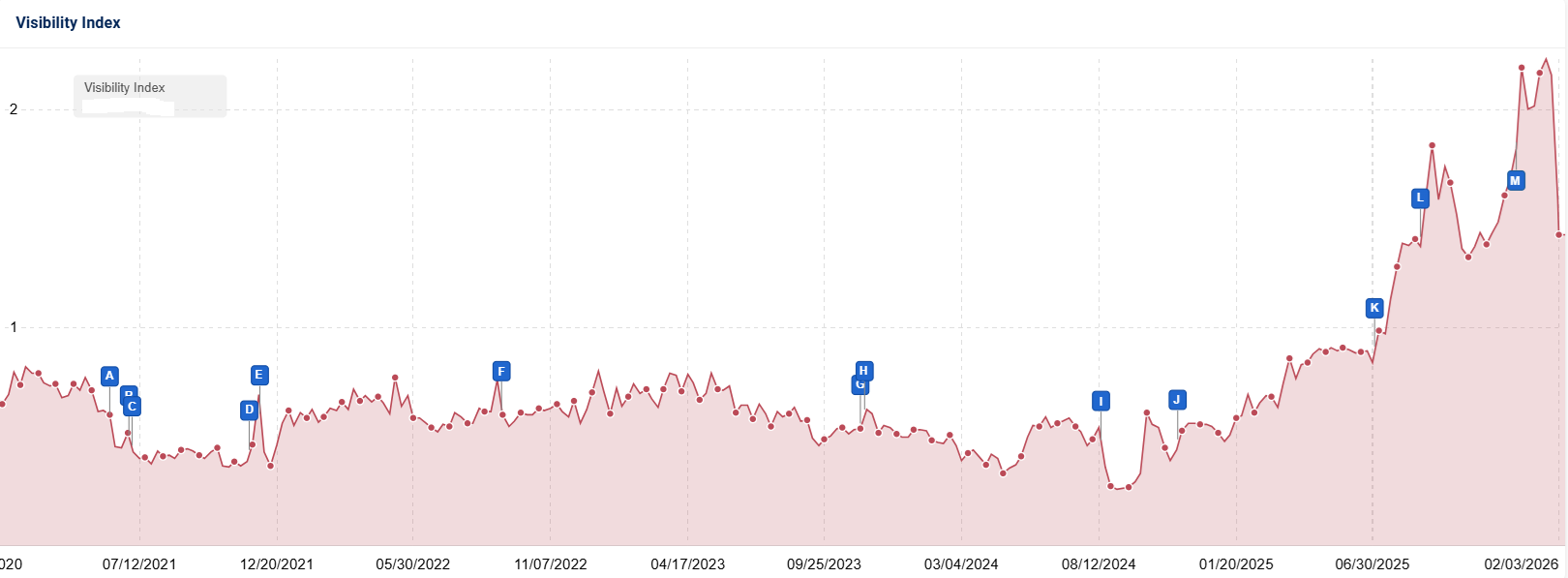
This company’s blog also represents about ~90% of its total visibility, containing 7,700 indexed articles on Google. The blog also greatly contributed to the site’s rapid growth in visibility over the last year:
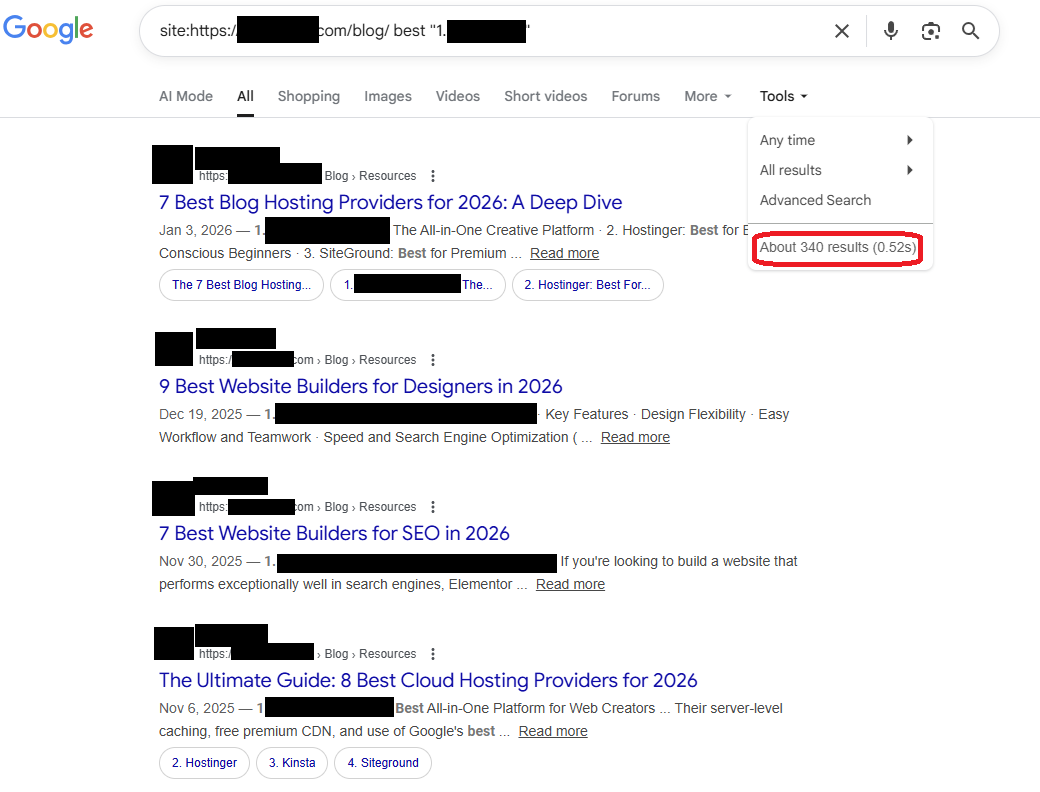
Digging into the use of self-promotional articles on this site’s blog, it turns out the site has 340 such articles on its blog that list its own company or their products as the #1 best in the space:
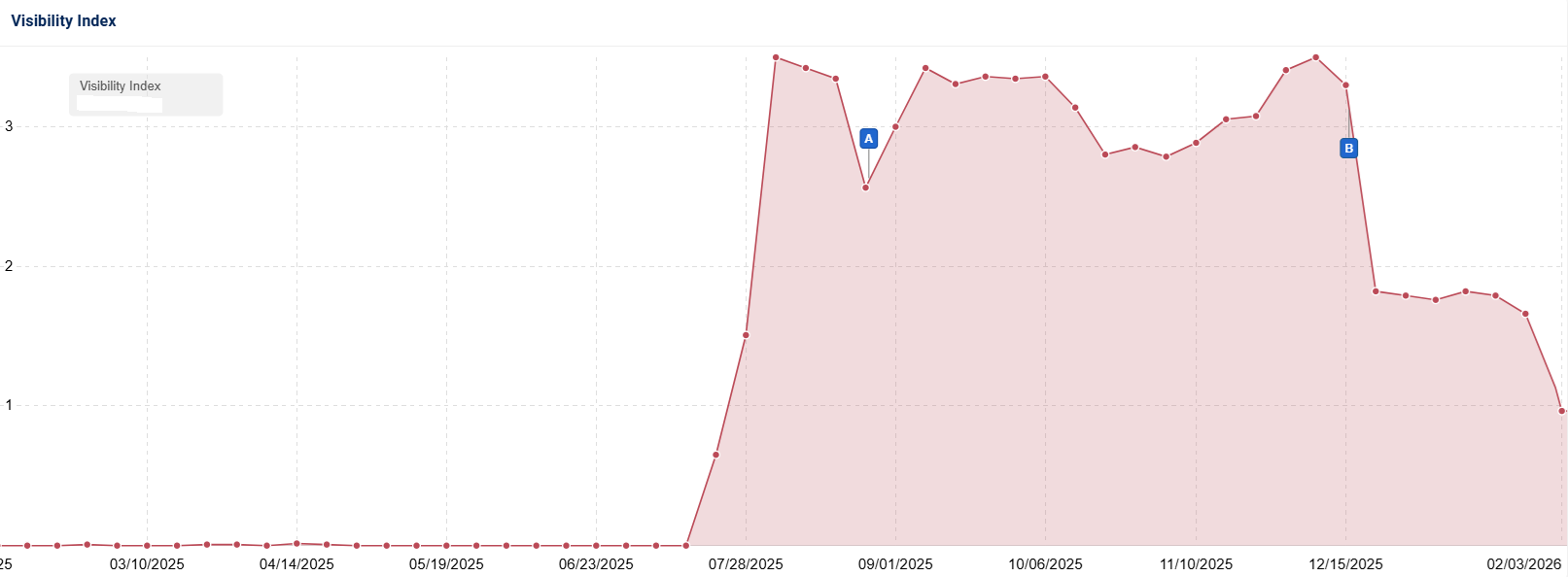
The next site is a software company, who appears to have launched their company blog around July of 2025. The blog represents about 93% of the site’s overall SEO visibility. Below is a view of the full site’s visibility trajectory:
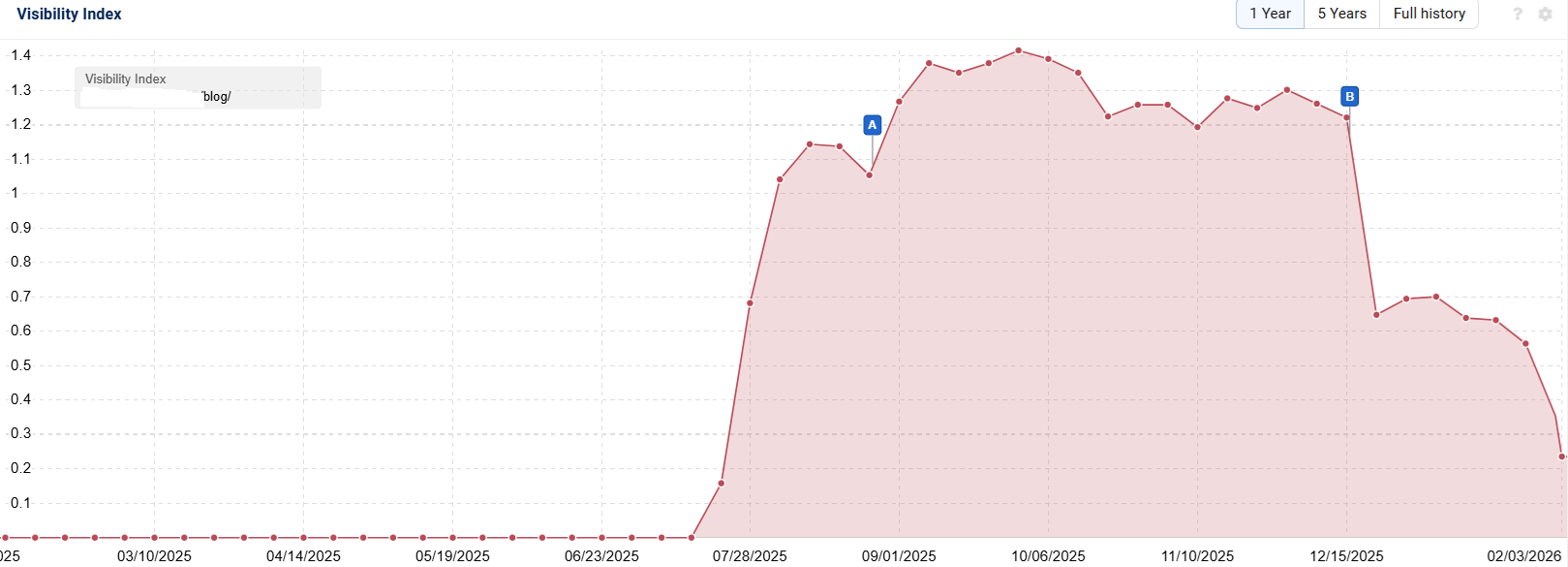
And below is a view of just the blog subfolder’s visibility. For this site, the drop appears to have started during the December Core Update, and was exacerbated by movement in recent weeks:
Looking at the 1,420 articles on this company’s blog, 61 of them (4%) are self-promotional listicles:
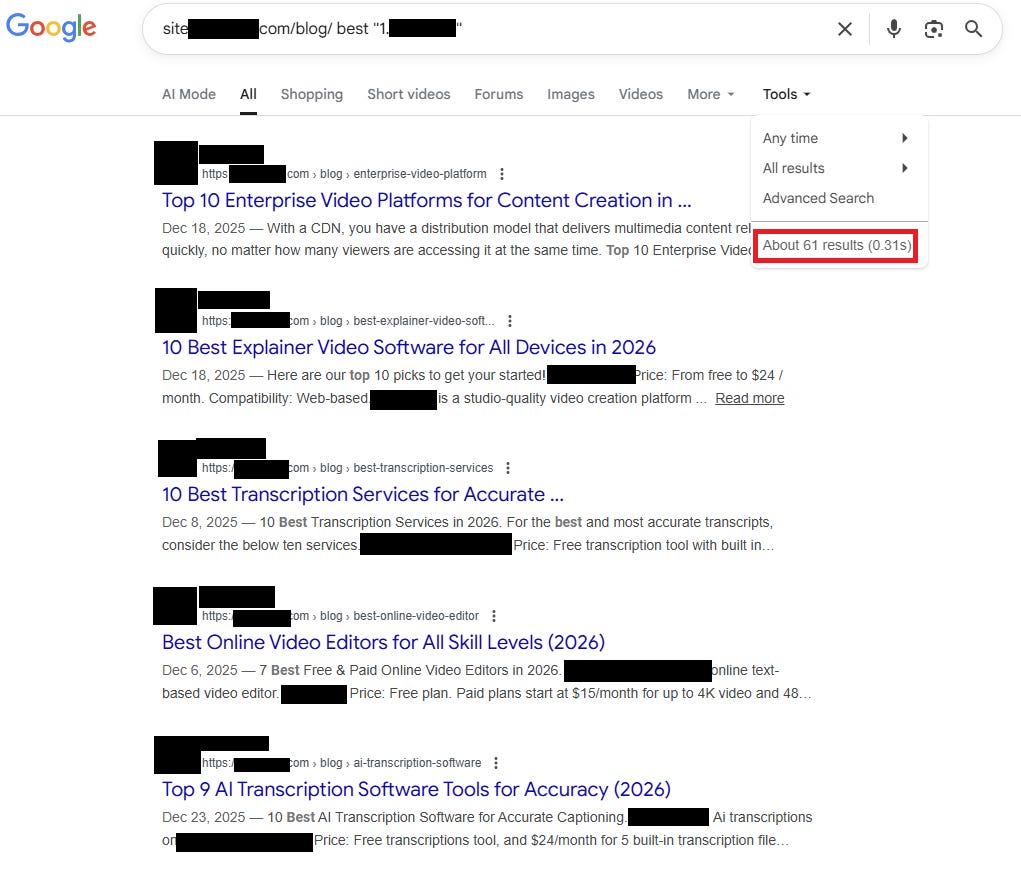
Lastly, here is an example of another SaaS company and digital marketing provider that lost -29% of its organic visibility since mid-January, 2026:
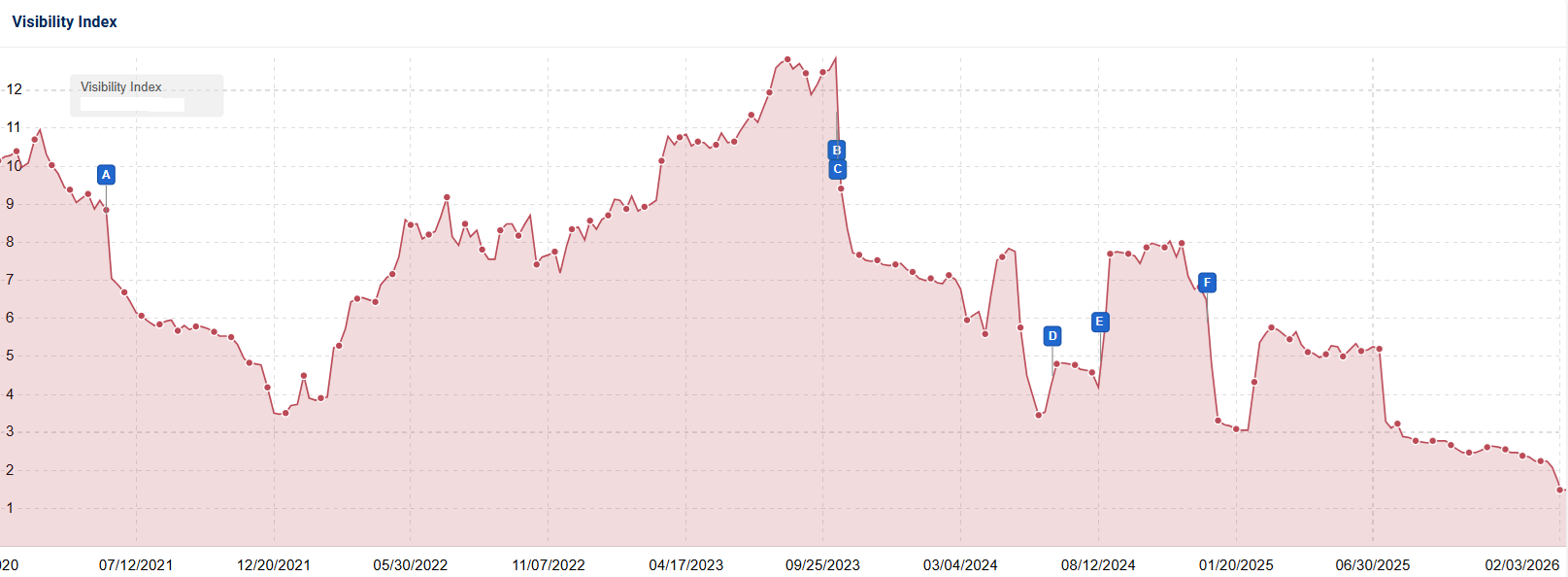
The /blog/ folder on this site represents over 90% of the site’s organic visibility in Google search, containing 1,700 indexed results on Google:
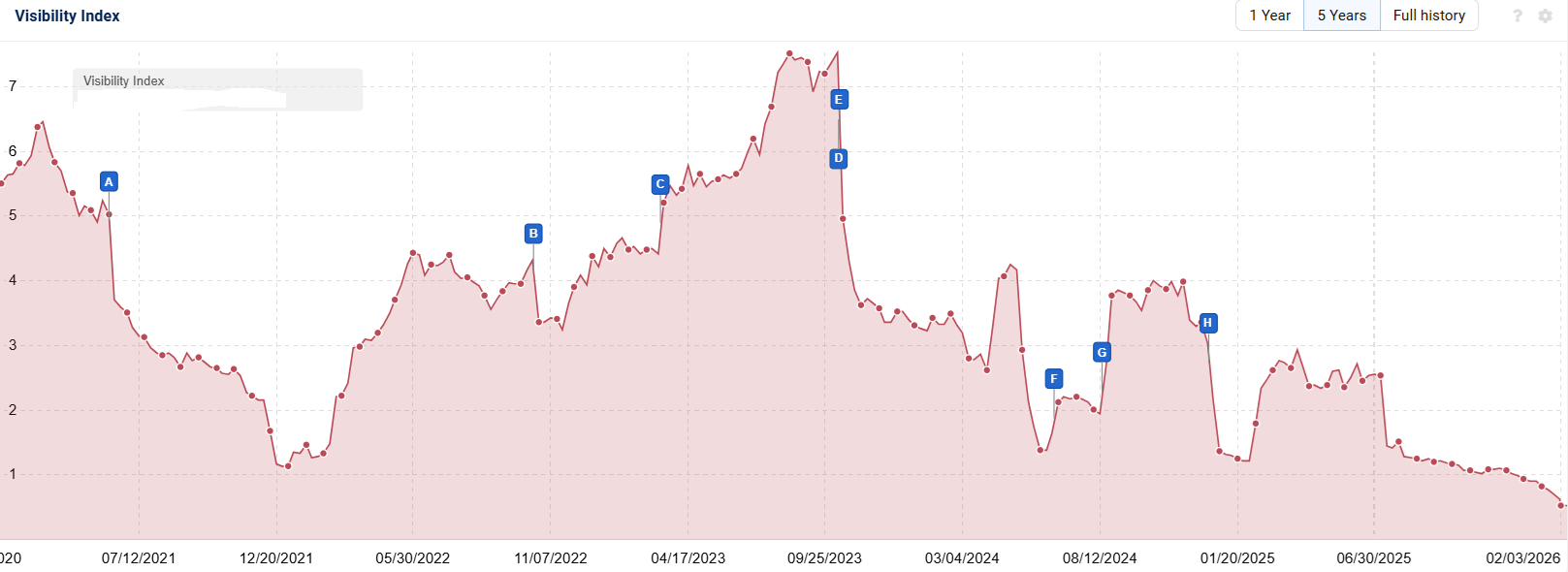
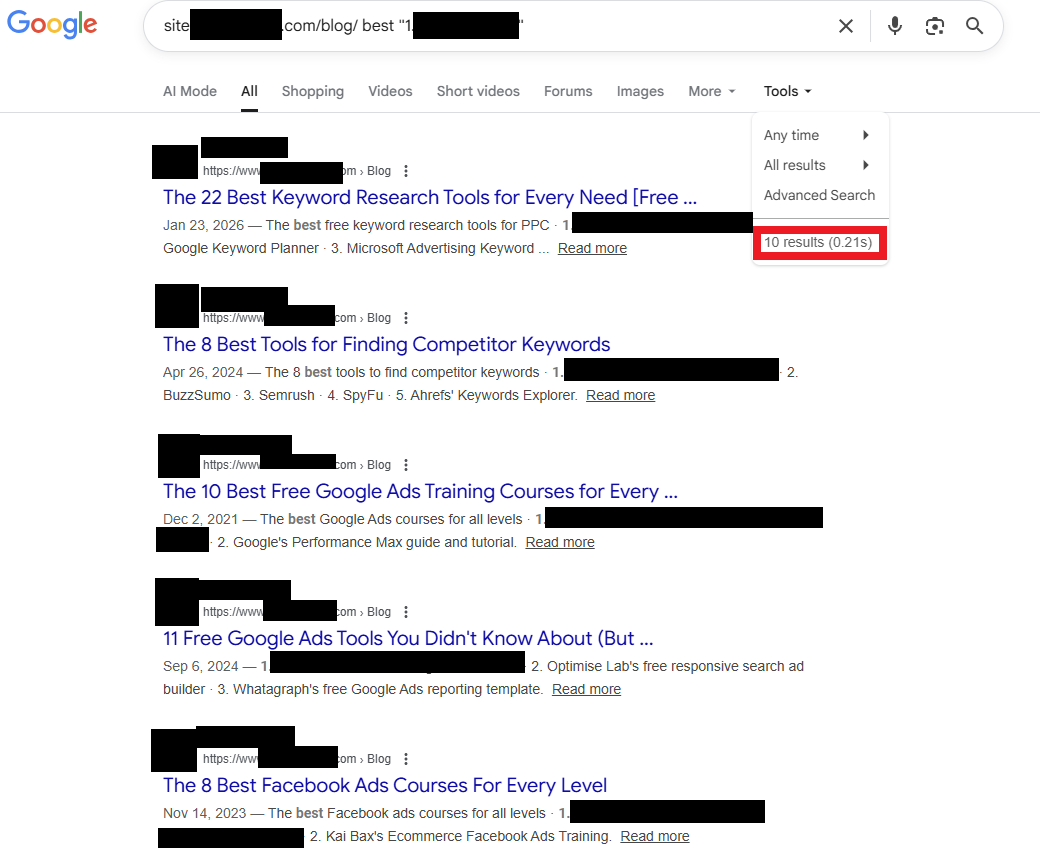
This site had only 10 self-promotional listicles, an extremely small number overall. Even so, if pages like these are truly contributing to the visibility decline, it underscores how heavily Google may be weighting them in its evaluations.
Common Trends Among Affected Sites
It’s important to note that self-promotional listicles are only one tactic among many used by these sites in their content strategies, alongside other approaches that may be perceived by Google as prioritizing SEO over ‘helpful, reliable information that’s created to benefit people.’
That said, there are some other commonalities among these sites that are worth pointing out:
All of these sites are in the SaaS space, which could suggest that they are likely to be paying close attention to recent SEO/GEO trends
Many of the blogs and resource centers actually contained specific guidance around GEO and AI search
Many of these sites had recently scaled content quickly, which could be an indication that they are using (or over-utilizing) AI to quickly scale content, perhaps with insufficient human oversight
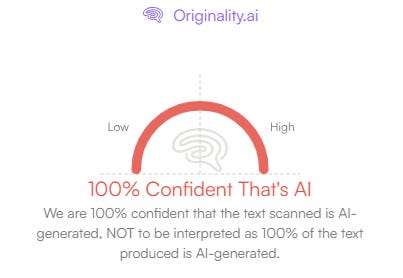
I dropped several of these articles into originality.ai’s AI detection tool, and all returned a 100% confidence score that the text is AI-generated
The blogs were using other tactics I have seen get sites in trouble with during Google’s algorithm updates: artificial refreshing (including recent dates when the article was not substantially updated); Schema.org violations, such as misusing AggregateRating Schema across ineligible pages; excessive informational/definition-based content, content that is overly salesy and/or strays from the main purpose of the site, and heavy automation/programmatic templates scaled across hundreds or thousands of pages
It’s also important to note that I found examples of a few sites that saw heavy performance declines in their blogs, but were not over-utilizing self-promotional listicles in their content. That said, they were using other tactics that could affect performance, often tied to review articles and other articles leveraging highly-similar. programmatic page templates:
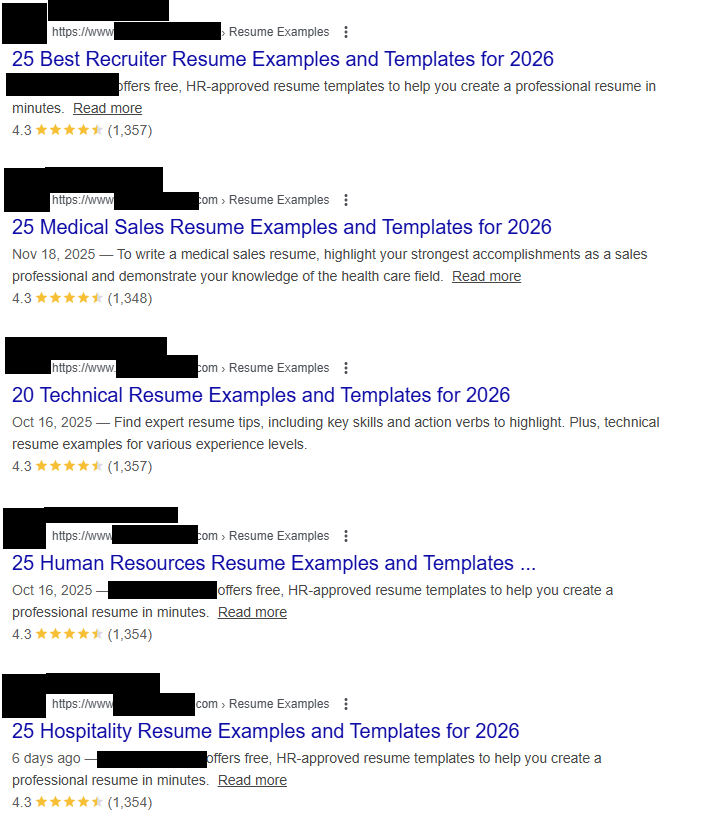
Self-promotional listicles may only tell one part of the story. That said, given that this approach was common among all the companies with the largest drops (and other companies not included in this article), it looks to me like a major likely culprit worth considering when evaluating the overall quality of these blogs and resource centers.
The Impact of Declining SEO Visibility on AI Search
SEO and AI search performance are closely tied together, especially Google’s AI search results and other LLMs that scrape Google. I spoke to Glenn Gabe, who has also been monitoring the same sites seeing declines, and he just shared this article today showing how these 4 sites are rapidly losing visibility in AI Overviews. Note that all 4 of these sites were included in the examples shown throughout this article:



Presumably, these drops in Google organic results will also impact visibility across other LLMs that leverage Google’s search results, which extends beyond Google’s ecosystem of AI search products like Gemini and AI Mode, but is also likely to include ChatGPT.
I will dig into these outcomes as much as possible in the coming days and share what I find. Also, feel free to share any anecdotes or findings in the comments!
Wrapping Up
Self-promotional “best” listicles have proven to be an effective shortcut to visibility in both traditional search and AI-generated answers (GEO) - but new data suggests that shortcut may be contributing to performance declines in SEO.
Note: yes, it’s still possible to find examples of this approach working. Like all SEO hacks, it can take a while for Google to demote the tactic across the board, and the results are not always perfect. Some listicles will surely continue to perform.
But as Google continues to refine how it evaluates quality, intent, and trust - especially in review-style content - tactics that prioritize self-promotion over genuine evaluation appear increasingly risky.
While these pages may still drive short-term gains and have shown success in AI search, the recent volatility signals that long-term visibility in both organic search and AI systems is more likely to favor content grounded in real-world experience, transparent methodology, and demonstrable value to users. As with many SEO trends before it, what works today may quietly become a liability tomorrow.
Scaling low quality content like this and putting it on your own site is just asking for trouble. It’s just spam aimed at influencing search rankings, clearly against Google guidelines.
The approach that these sites took is ham-fisted, but listicles can still work. Start by not posting it on your own domain, have others post it for you on their sites. Paying for links is against Google guidelines, but you can pay people to say nice things about you. LLMs are especially credulous, they will cite almost anything they come across. Add supporting data and research to back up your claims. Basically PR & marketing aimed at influencing AI citations.
Damn, this is great work Lily. You found some egregious examples of low quality, cheap listicle pages. This is lazy marketing work only exacerbated by AI content creation. Google has no choice but to crack down. The days of self-serving puffery are probably coming to an end soon. I do wonder if a comprehensive listing page done “right” with real research and insights can stand the test of time? So few are doing that unfortunately. It will be interesting to see how things play out here.